Socialists and Communists have been predicting the end of Capitalism since Marx wrote the Communist Manifesto in 1848, which put the system into its historical context, and projected an ultimate uprising by its primary victims; the working class known in Marxist parlance as the "proletariat." Thus far their predictions have had the same accuracy as apocalyptic prophecies announcing the end of the world, which is to say, one big zero. There have been a handful of socialist uprisings of various degrees of success, but none have succeeding in doing away with capitalism on a global scale. This has led many to conclude that Socialism simply "doesn't work" and that Capitalism is, in fact, the best possible system.
Therefore, the Left and the Right, here in America, both seem to have accepted Capitalism almost as a law of nature. It is a given. The only question remaining then, the only tension, is whether to approach it with a laissez faire attitude that, though there will be a few hiccups, if you just trust in the system, the market will work in the best interests of the people as a whole; or the regulatory approach which holds that capitalism needs to be curbed, given limits, to manage inequality, to provide safety nets that ensure that huge numbers aren't killed and exploited too badly in the process of the market working itself out. Even if we look at the animosity between the progressive "Berniecrats" in the Democratic Party, and the establishment ideology embodied by Nancy Pelosi, the Clintons, Cory Booker, and Diane Feinstein, the difference is primarily not one of quality but of degree. They want corporations to start paying their fair share of taxes by closing loopholes or, if they're really far left, using progressive taxation to recoup some of the value theft stolen from the workers by the capitalist system, and giving it back to the people in the form of tax-funded social programs. This generally amounts to looking at Marx's critique of capitalism, and trying piecemeal to account for the worst of it, and smooth out the defects in the system. But it is outside the bounds of political acceptability to discuss REPLACING capitalism.
I understand; it would be a massive undertaking. It would require a paradigm shift across the board, and would be a commitment to a period of instability for the transition period. Capitalism colors our thinking, the way we structure our relationships, our life decisions, our friendships, our purchases, our tastes. Switching to a new system would require, not only changing how we do business and how we govern, but how we think. It would entail a new value system and a new cultural mythos. Just thinking about it is daunting. The obstacles might even seem insurmountable. Why should we go to all that trouble when there is no guarantee that whatever we come up with will even be any better than what we have now? It will almost certainly be worse for some people, no matter what it is, and no one wants to be that person. So why should we take this colossal risk, and upset our whole way of life? Because it is necessary.
Predictions of the end of capitalism have always failed, but this does not prove that capitalism is eternal, or the best system out there. These predictions have largely depended on the idea that such a collapse (and subsequent rise of socialism or communism) was inevitable. Marx, Luxemburg, and others believe that the transition to socialism was established in the course of history, as an unavoidable direct progression. This is a mistake of hindsight. Life is unpredictable. Without the Black Death wiping out 1/3 of Europe's population, serfdom might have continued indefinitely. Without the Medici family creating a banking empire, that enabled the growth of private wealth; had Columbus sunk while crossing the Atlantic and never introduced Europe at large to the vast resources and markets of the New World, feudalism might have been replaced by something altogether different than capitalism, and we would never have had this conversation. It was never inevitable that we end up with this system at all, but now we have it. It is not inevitable, that we do away with it, but now we have to. This need is not mandated by some historical progression or convenient narrative, but by the present needs of humanity.
We have ravaged our ecosystem. The endless pursuit of ever greater profits has led to mass deforestation, to the pollution of our air and water, and to the extinction of a plethora of species. Our need for bulk quantities of food has led to homogenization of seeds, which are patented and must be bought. This reduces diversity, and makes us ultimately more susceptible to disasters and major food shortages should there be a blight that effects the kinds of crops we grow. Diversity in plant and animal life also supports a number of other chains, and the removal of these species throws whole food webs into disarray. Between our beef industry, keeping miles and miles of cows, and our oil industry, pumping tons of carbon into our atmosphere, our global climate is getting hotter. 97% of climate scientists agree that we are doing this to ourselves. This is not just about having warmer weather. Climate change causes wider temperature fluctuation and anomalies. We will soon be see 30 degree temperature anomalies causing massive deaths of people and crops; and with the widespread crop loss, we will start to see worldwide famine take the result of millions (perhaps a billion or more) lives. Stephen Hawking says that we need to have populated another planet within 100 years if we are to survive, and gives us (factoring in climate disasters, the threat of nuclear war, AI, and so forth) 1000 years at most on Earth.
So why does that necessitate an end of Capitalism? Can't we just, you know, regulate the industries that are causing the problem? Maybe. But that's a fraught road. It sets us up to fail at any of a hundred places. Remember, everyone uses cars, trucks and so forth, that run on fossil fuels. All the corporations are going to keep using that as long as it's cheaper than overhauling the entire system all at once. It's hard to switch quickly under those circumstances, and we're running out of time. Meanwhile, we while there is money to be made selling beef, its going to be difficult to convince cattle farmers to stop herding cows. And these are only a few industries to think about. We also have to stop coal, AND establish new industries to pick up the slack. We have to convince every car company to switch entirely to 0 emissions vehicles. And keep in mind that we still have all these gasoline cars lying around. What do we do with THEM? How to we make sure they don't go on polluting? And factories all over the world making all kinds of products pump out carbon emissions day in and day out. And just look how tenuous our regulations have proven, now that Trump is pulling the US out of the Paris Accord, and rolling back regulations left and right. That's the problem with regulations; they are always subject to deregulation. To go about it this is the path of Sisyphus. At any point that boulder might roll right back down the hill.
That's the problem with working within the current system. Any changes we might make will be too small to be effective and too vulnerable to count on. Desperate times call for desperate measures. If we are to make the necessary changes, we will need to go big. We need to shoot for the moon. We MUST attempt more than we think we are capable of. We MUST try to build a new world; not just tinker with this one. Private profits will always get in the way. Private profits are destroying this planet; and private profits are ensuring that we don't do anything real about it. Private profits are making sure we don't have adequate healthcare, and private profits are bribing our politicians to defend the status quo. Private profits are poisoning our rivers and streams, and private profits are taking water that is ours so they can sell it back to us. Private profits are turning our world into a wasteland for us, while the rich who ruined it get to retreat to their private islands and country clubs. Private profits are what allows them go on burning down the world, as long as it lasts just long enough for them to live out their lives in luxury.
Capitalism must go. Not because IT needs to, but because WE need it to.
Showing posts with label Corporate Greed. Show all posts
Showing posts with label Corporate Greed. Show all posts
Thursday, June 1, 2017

Wednesday, December 14, 2016
Solar Power and Energy Independence
I have had many conversations with those close to me about sustainable energy, and why Big Oil, Edison, and other major energy producers are so stubbornly opposed to the transition to more sustainable energy sources like Solar power. The argument I often hear is "wouldn't they make MORE money?" Or else "The oil will run out. Investment in Solar is an investment in THEIR OWN future." We can also point to arguments made on both sides of the climate change debate. However, it is my assessment that the reality of climate change and even money come secondary to the true purpose behind the continued reliance on coal and fossil fuels. The ultimate reason for the resistance to solar energy is not to make objectively higher profits, it is to control the market for energy.

Examine what has already happened with solar energy: those who have invested the funds into making their homes fully integrate solar energy, with modern panels, tend to have their energy bills drastically slashed, or even nonexistent. At the far end of the spectrum, some users even gain some monthly INCOME from surplus energy produced by their solar systems. This has made it increasingly plausible for people to live "off the grid" and thereby to weaken the stranglehold that Edison has over the electrical needs of the people. In some states, like Florida legal hurdles are being put up to prevent people from living off the grid. This is primarily a matter of energy independence, not of the nation, but of individuals. The more people who can supply their own power, the less energy companies like Edison remain necessary. Ultimately, the energy companies will be rendered redundant, and collapse. Therefore they fight to protect their monopoly on power, by lobbying the government to restrict access.
Big Oil is similarly invested in preventing Solar Energy from taking hold. The burgeoning solar industry threatens Big Oil's longevity. Since there is such potential for people to acquire surplus energy, this creates an incentive towards the predominance of electric cars over those run on gasoline. If solar panels continue to be made more efficient, each home could be able to supply enough power to consistently charge a car, effectively for free, making Big Oil similarly redundant.
The transition of such companies from the oil industry, or even from the traditional forms of electricity into solar companies would only be a stopgap measure. For a good long while, there will be a market for solar energy as people become energy independent one by one. The technology will inevitably become cheaper and more efficient to produce and install, making it more commercially available even for lower income families. Ultimately, it will reach the point where Solar is simply cheaper and better than paying the energy company, and the return on investment will come sooner and to a greater degree. The rate of homeowners switching to solar will increase exponentially. There will come a point at which there is too much independent energy, let's call it "Energy Critical Mass." When we reach this Energy Critical Mass, there is no longer any social need for an energy company. It serves no purpose. Neighborhoods will at this point produce so much energy that charging money for it becomes an utter absurdity. With this advent comes the complete energy independence, not only of the nation from foreign oil reserves, but indeed of most individuals from energy companies altogether.
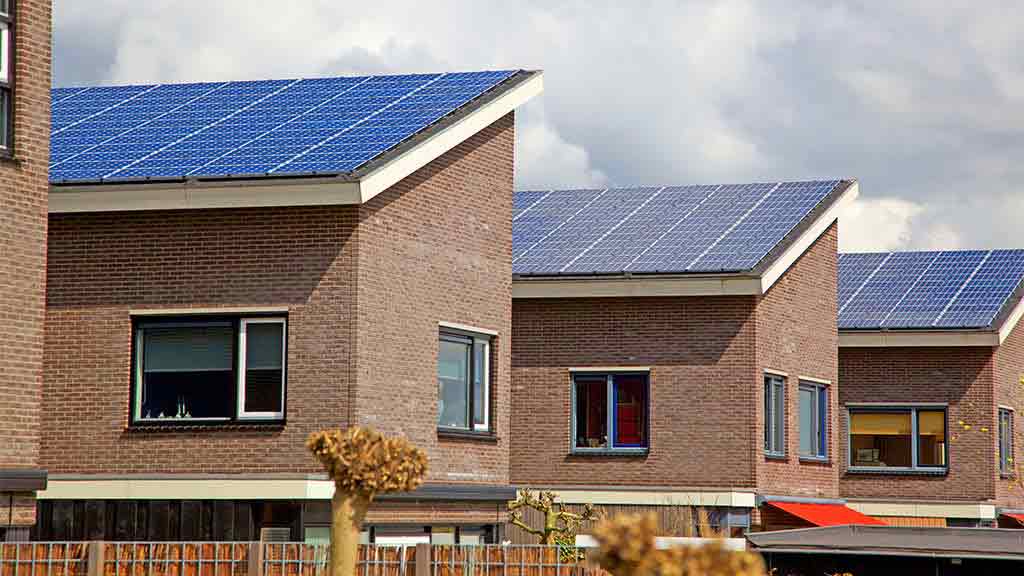
This form of economic and energy independence of the average citizen will be a tremendous democratizing force. It will eventually level the playing field in a significant way. When those living in poverty, or on the edge of it, are freed from their bondage to monthly utilities bills and gas expenditures, they will achieve unprecedented freedoms, in terms of freedom of movement and self-reliance. They will be able to freely relocate to where their skills are most valued, shifting the balance of bargaining power in the employer/employee dynamic in favor of the worker, weakening the hold bosses can have over those working under them. Employers who offer lower wages or fail to offer benefits will risk losing their workers, whose poverty once forced them to accept what work they could get where they were, not only to locally competitive rivals, but to rivals at great distance as well. They will ultimately have no recourse but to adequately and humanely see to the wellbeing of their workers. Capitalism will be required to adopt a conscience or die.
It is my belief that this in inevitable. Government action on behalf of electric or Big Oil lobbies, the restriction and holding back of research and development regarding solar energy can only forestall this eventuality. They can hold it off for a time, perhaps even a very long time, but sooner or later it MUST come to pass that the people at large will be freed from the yoke of their masters. As they gain one freedom they will demand another, until all chains have been broken. It is only a question of when?

Examine what has already happened with solar energy: those who have invested the funds into making their homes fully integrate solar energy, with modern panels, tend to have their energy bills drastically slashed, or even nonexistent. At the far end of the spectrum, some users even gain some monthly INCOME from surplus energy produced by their solar systems. This has made it increasingly plausible for people to live "off the grid" and thereby to weaken the stranglehold that Edison has over the electrical needs of the people. In some states, like Florida legal hurdles are being put up to prevent people from living off the grid. This is primarily a matter of energy independence, not of the nation, but of individuals. The more people who can supply their own power, the less energy companies like Edison remain necessary. Ultimately, the energy companies will be rendered redundant, and collapse. Therefore they fight to protect their monopoly on power, by lobbying the government to restrict access.
Big Oil is similarly invested in preventing Solar Energy from taking hold. The burgeoning solar industry threatens Big Oil's longevity. Since there is such potential for people to acquire surplus energy, this creates an incentive towards the predominance of electric cars over those run on gasoline. If solar panels continue to be made more efficient, each home could be able to supply enough power to consistently charge a car, effectively for free, making Big Oil similarly redundant.
The transition of such companies from the oil industry, or even from the traditional forms of electricity into solar companies would only be a stopgap measure. For a good long while, there will be a market for solar energy as people become energy independent one by one. The technology will inevitably become cheaper and more efficient to produce and install, making it more commercially available even for lower income families. Ultimately, it will reach the point where Solar is simply cheaper and better than paying the energy company, and the return on investment will come sooner and to a greater degree. The rate of homeowners switching to solar will increase exponentially. There will come a point at which there is too much independent energy, let's call it "Energy Critical Mass." When we reach this Energy Critical Mass, there is no longer any social need for an energy company. It serves no purpose. Neighborhoods will at this point produce so much energy that charging money for it becomes an utter absurdity. With this advent comes the complete energy independence, not only of the nation from foreign oil reserves, but indeed of most individuals from energy companies altogether.
This form of economic and energy independence of the average citizen will be a tremendous democratizing force. It will eventually level the playing field in a significant way. When those living in poverty, or on the edge of it, are freed from their bondage to monthly utilities bills and gas expenditures, they will achieve unprecedented freedoms, in terms of freedom of movement and self-reliance. They will be able to freely relocate to where their skills are most valued, shifting the balance of bargaining power in the employer/employee dynamic in favor of the worker, weakening the hold bosses can have over those working under them. Employers who offer lower wages or fail to offer benefits will risk losing their workers, whose poverty once forced them to accept what work they could get where they were, not only to locally competitive rivals, but to rivals at great distance as well. They will ultimately have no recourse but to adequately and humanely see to the wellbeing of their workers. Capitalism will be required to adopt a conscience or die.
It is my belief that this in inevitable. Government action on behalf of electric or Big Oil lobbies, the restriction and holding back of research and development regarding solar energy can only forestall this eventuality. They can hold it off for a time, perhaps even a very long time, but sooner or later it MUST come to pass that the people at large will be freed from the yoke of their masters. As they gain one freedom they will demand another, until all chains have been broken. It is only a question of when?
Wednesday, October 26, 2016
Vote Love
I came across this wonderful video today, and simply had to share. I got to the end, and just felt a deep need to watch it again. I cried both times. I have had a very hard week, and this message was exactly what I needed. We all need to stand up for love, every day, every moment.
Monday, February 15, 2016
Protesting the TPP
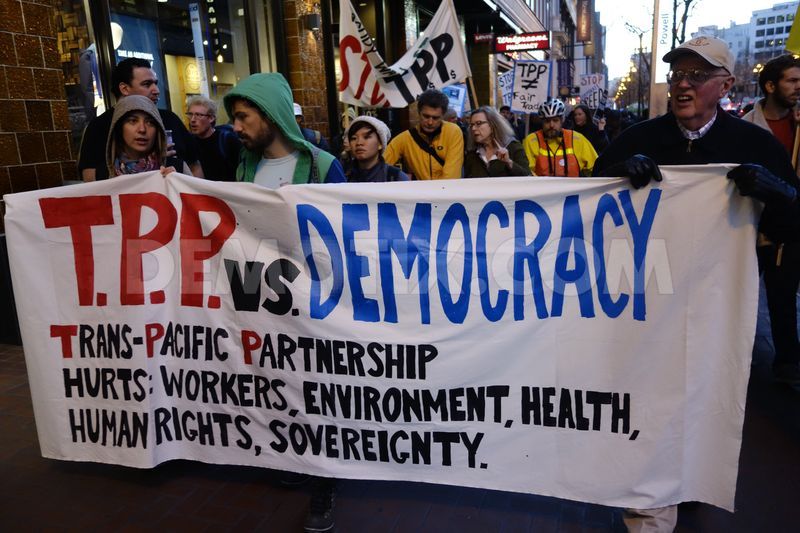
Going down to Rancho Mirage, CA today to protest the Trans-Pacific Partnership, which would sell out not only our environment and economy, but even our own national sovereignty to the depredations of corporate greed. This is a disaster of legislation that must not be allowed under any circumstances.
If you are near the area, I urge you to join us. President Obama and leaders from Southeast Asia will be present to discuss getting the deal ratified. Let's show them that we don't want any part of this corporate coup.

If you are near the area, I urge you to join us. President Obama and leaders from Southeast Asia will be present to discuss getting the deal ratified. Let's show them that we don't want any part of this corporate coup.
Sunday, February 7, 2016
Bread and Circuses
Today's the big day! The Super Bowl! A titanic struggle of champions for glory and the adoration and adulation of the masses. A test of skill, teamwork, and spirit to determine once and for all, or at least a year, who is the greatest of them all. That is the premise of the event. But we all know that the Super Bowl is really about the commercials. It is the one time of year where we actually WANT to watch the commercials, maybe more than the actual event. This time, the companies make it their special mission to entertain us as much as market to us. This day we forget our troubles. This day we gather and consume, and revel in team spirit and merchandising.
In the days of Imperial Rome, the ways the upper class (Patricians) kept the lower classes (Plebians) in check was a system known as "bread and circuses." By giving them enough to not starve to death, and something to keep them entertained, they largely prevented the masses from rising up to overthrow their oppressive overlords. "Circuses" in those days, by and large, meant gladiatorial combat. Throughout history, even today, nations have provided "circuses" as means for people to let off steam, so they forget they are under control. At no time is the parallel more apparent than in a game of football, and none more so than the Super Bowl. A team of men charging at each other in mock military patterns, slamming violently into one another, often resulting in injury, these are America's gladiators.
The problem is, that by going along with this, we are playing into the hands of a system meant to keep us in check. The corporations who own this country are especially strong today, and will make us love them, if only for a day, and convince us to keep consuming. Buy buy buy, spend money you don't have on shit you don't need. It's something you've been conditioned to do, and we're made to love the occasions that reinforce this behavior the most.
I'm sure this message will be upsetting to many people, because you may love the super bowl. You may love the game, or just the commercials. And that's actually ok. Enjoy the game. But be aware of its roll. Why is it this such a big deal? Because it gives you something to rally behind instead of a real cause. It gives you a distraction, a place to spend your emotions, so that you continue to be apathetic to the way the corporations and the government are screwing you over. We all need distractions now and then, or else we'd go mad. Just make sure you don't forget what you're being distracted from.
Subscribe to:
Posts (Atom)